Commercial Flooring Systems in India
Introduction: The Floor Nobody Notices Until It Fails
Flooring is the surface every visitor, employee and delivery cart touches, yet it's usually the line item that gets the least design conversation and the most schedule pressure. That's backwards — flooring failures are visible immediately, expensive to fix once furniture is in place, and almost always trace back to a decision made before the finish was ever chosen.
"Commercial flooring" isn't one material — it's a family of systems (vitrified and granite tile, epoxy and PU resin, carpet tile, raised access floors, SPC and vinyl) each suited to a different zone, load, and maintenance regime. This guide walks through how those systems differ, why the substrate underneath matters more than the finish on top, and what actually drives flooring cost in India.
It's written for the same reason our office fit-out cost guide was: flooring decisions get locked in early, are expensive to reverse once tiled or screeded, and are one of the easiest line items to under-spec without realising it until the floor is a year old.
What Commercial Flooring Covers
As a scope of work, commercial flooring typically spans:
- Substrate assessment — moisture testing, flatness survey, crack repair
- Screeding and levelling compound where the slab isn't flat enough for the finish
- Material selection by zone — tile, resin, carpet, raised floor, or vinyl
- Skirting, transition strips, and expansion joint detailing
- Application or installation, including cure time for resin systems
- Sealing, polishing, or protective coating as a final step
Flooring also has to be sequenced carefully against MEP works below the slab or within a raised floor void, and against the site sequencing of everything else in the fit-out — flooring is typically one of the last trades in, which means every trade before it is a chance to damage a finished floor if protection isn't planned for.
Choosing a Flooring System
Vitrified & Granite Tile
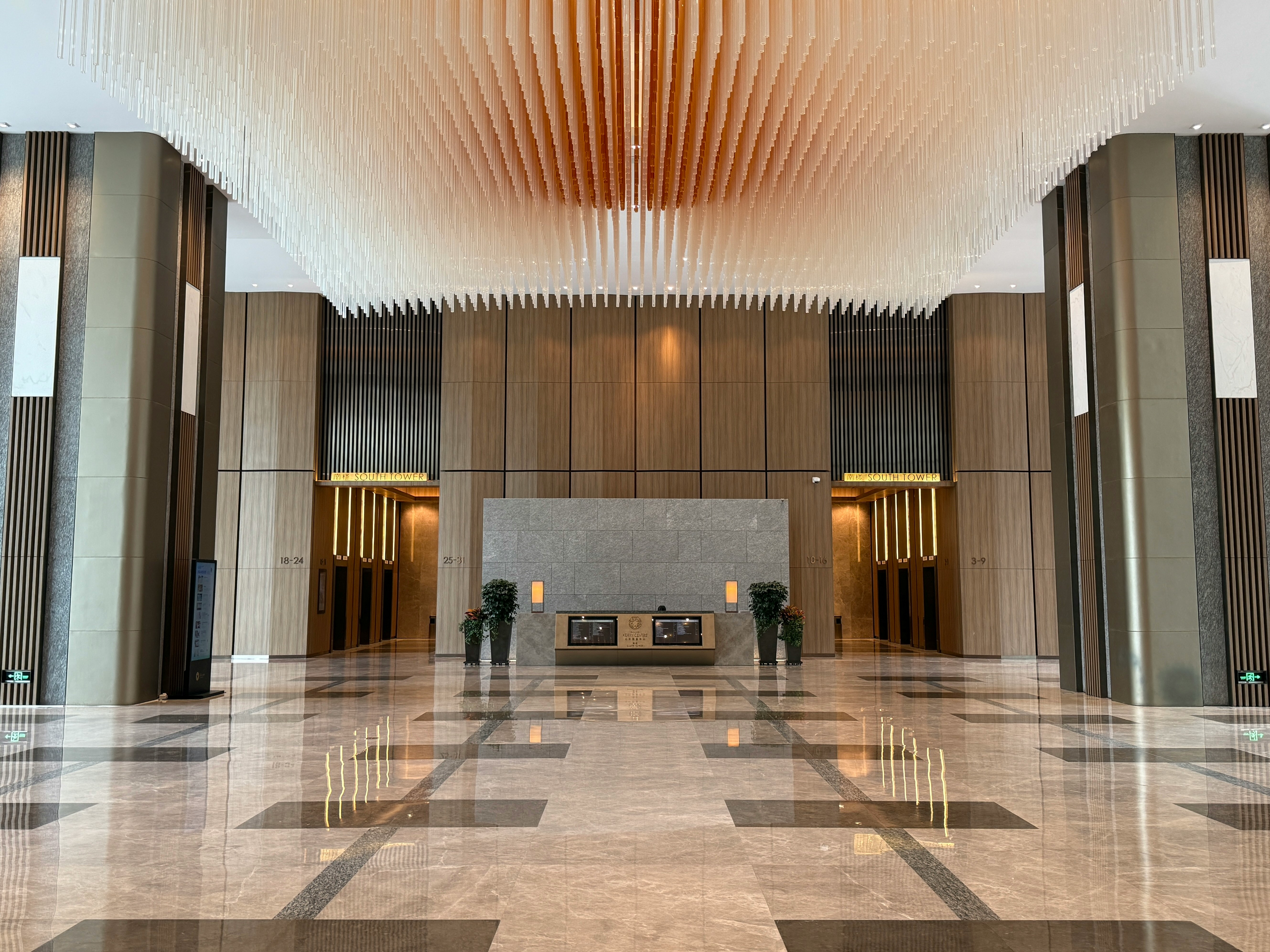
Vitrified tile is the default hard-finish flooring for Indian commercial interiors — a dense, low-porosity ceramic tile available in polished, matte, and textured finishes, generally the least expensive per sq ft of the main flooring systems. Granite and natural stone step up in cost and are usually reserved for reception lobbies and feature areas where the veining and shine read as premium. Both need a genuinely flat substrate; the tile itself won't hide an uneven slab, it will simply show every dip as a lippage or hollow-sounding edge.
Epoxy & PU Resin Flooring
Epoxy and polyurethane (PU) resin systems are seamless, chemical- and abrasion-resistant coatings applied in multiple layers directly over a prepared concrete substrate — standard for server rooms, labs, commercial kitchens, warehouses, and any floor that needs to be cleaned frequently without grout lines trapping dirt or moisture. PU generally handles thermal shock and heavier foot/wheel traffic better than standard epoxy, which is why it's more common in industrial and food-service settings, while epoxy remains the more economical choice for lighter-duty back-of-house areas.
Carpet Tile
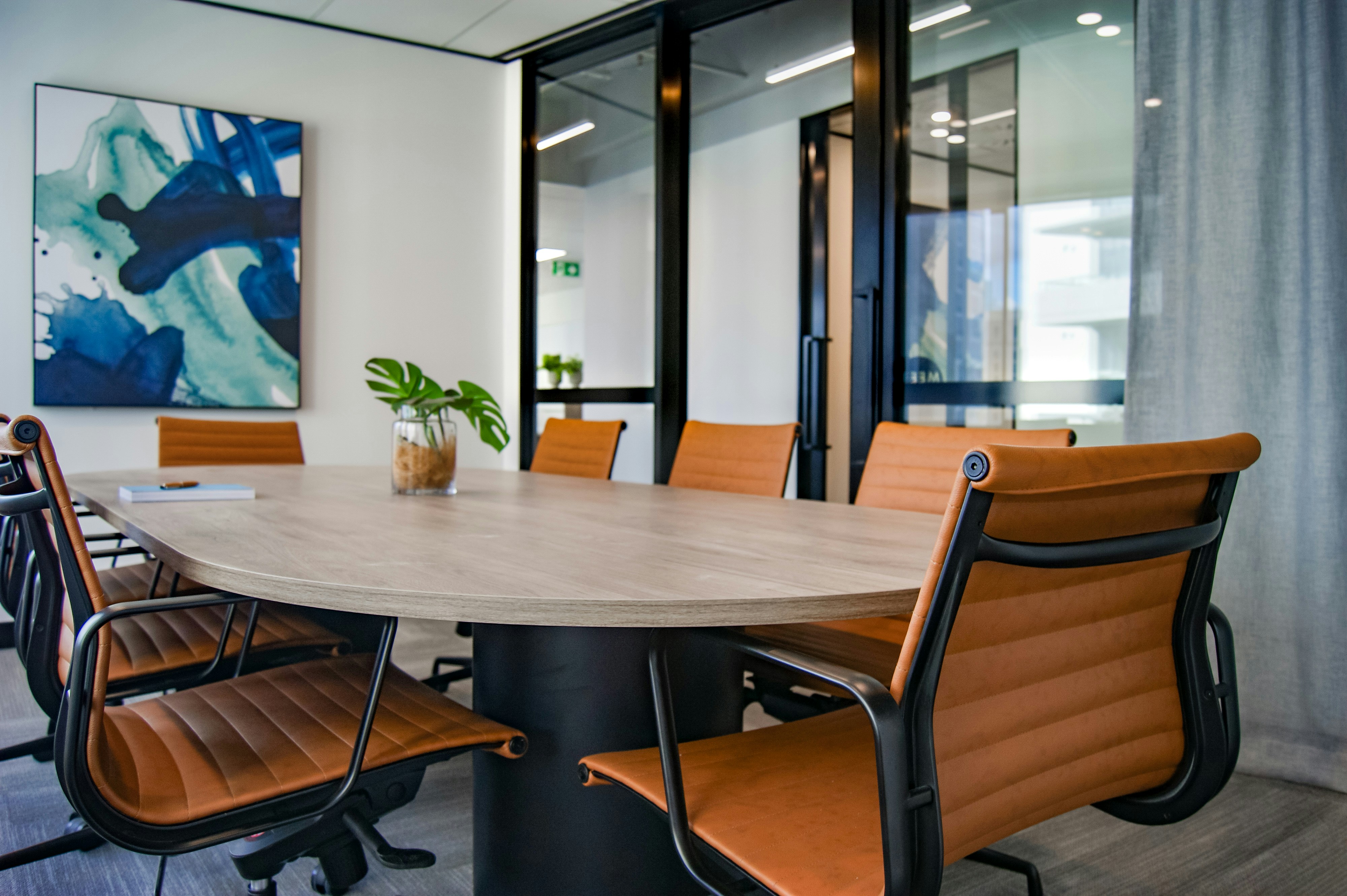
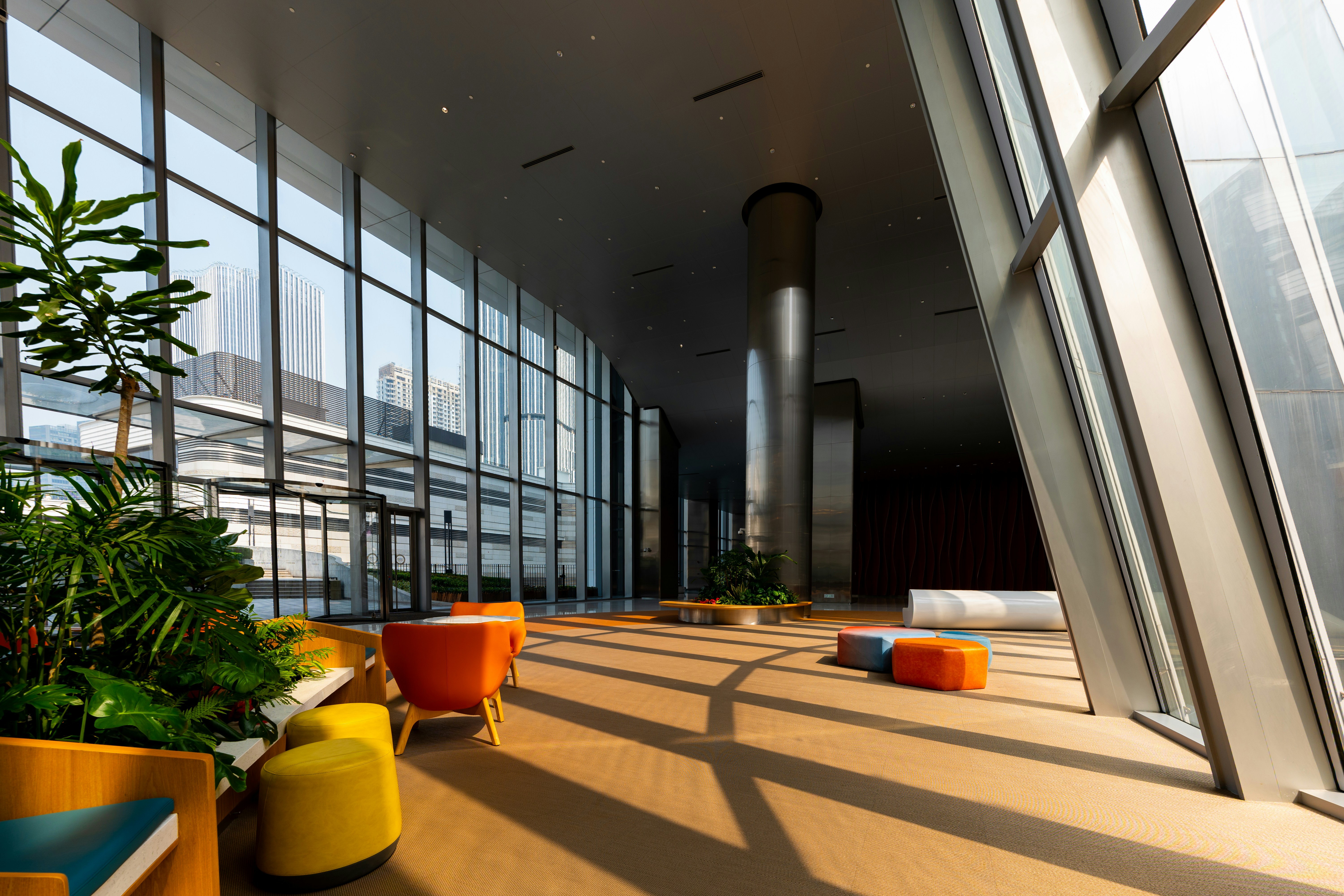
Carpet tile is the standard for open-plan office and cabin areas — quieter underfoot than a hard finish, better for acoustics in a large floor plate, and modular enough that a stained or worn tile can be swapped without disturbing the rest of the floor. Backing type and pile density both affect durability under rolling chair traffic, and a cheap backing is usually the first thing to fail, well before the visible pile wears out.
Raised Access Floor
A raised access floor is a grid of removable panels on adjustable pedestals sitting above the structural slab, creating a service void for power and data that can be reconfigured later by lifting a tile instead of opening a ceiling. It costs meaningfully more than a direct finish because it's a structural system in its own right, not just a surface — but on a floor with high desk density, trading rooms, or server infrastructure, the ability to reroute cabling without disruptive rework generally pays for itself over the lease term.
SPC & Vinyl Flooring
Stone plastic composite (SPC) and luxury vinyl tile sit between carpet and hard tile on cost and feel — waterproof, dimensionally stable, and increasingly used in hospitality and retail fit-outs where a wood-look finish is wanted without solid timber's moisture sensitivity or a hard tile's acoustic hardness.
Substrate Preparation: Where Flooring Actually Fails
Almost every flooring problem that shows up months after handover — hollow-sounding tiles, epoxy that delaminates in patches, a carpet tile grid that doesn't sit flat — traces back to the substrate, not the finish material. Concrete slabs need to be tested for moisture content before any resin or adhesive-set finish goes down; excess moisture vapour transmitting up through the slab is one of the most common causes of epoxy bond failure and carpet adhesive breakdown, and it isn't visible until the floor is already down.
Flatness is the second non-negotiable. A slab within a fit-out's structural tolerance can still be too uneven for a polished tile or a raised-floor pedestal grid, which is why a self-levelling screed is frequently needed as a distinct line item before the finish is scheduled — not an optional upgrade, but a correction the finish depends on. Skipping the survey step to save a day on the programme is the single most common reason a flooring contractor ends up doing avoidable rework at their own cost, or worse, leaving the client with a floor that looks fine at handover and fails within a year.
Wear Ratings, Loads & Maintenance
Flooring specification isn't just about appearance — it's rated for the traffic and loads it will actually see. Tile is graded by abrasion resistance (PEI rating) and slip resistance, both of which matter more in high-footfall lobbies and wet areas than in a quiet cabin. Carpet tile is rated by traffic class, and specifying a light-duty grade for a high-footfall corridor is a common way budgets quietly overrun on early replacement.
A raised access floor needs its panel loading grade specified per zone, not uniformly — general office areas can run a medium grade, but server rooms, filing areas, and any route used by a pallet truck during fit-out need a heavy grade identified on a drawing before ordering, not discovered when a panel cracks. Maintenance regimes differ just as much: resin floors need the right cleaning chemicals to avoid degrading the coating, while carpet tile needs regular vacuuming and periodic deep cleaning to protect against premature wear.
Flooring by Use-Case
A corporate office typically runs carpet tile through open-plan and cabin areas, vitrified or granite tile in reception and pantries, and epoxy or vinyl in server rooms and back-of-house zones — matching the guidance in our fit-out execution guide. Retail and hospitality projects lean more on stone, SPC, and vinyl for their visual warmth and durability under continuous public footfall, while warehouses and industrial floors are almost always polished concrete, epoxy, or PU resin because of the point loads from racking and material-handling equipment. Choosing a system without matching it to the actual traffic and load pattern of the space is one of the more common — and expensive — specification mistakes.
Underlayment, Impact Sound & Acoustics
Flooring choice affects a building's acoustics in two distinct ways that are easy to conflate. Airborne sound — voices, music — is mostly a ceiling and partition problem, covered in our false ceiling and acoustic design guide. Impact sound — footsteps, dropped objects, rolling chairs — is a flooring problem, and it's transmitted through the slab to the floor below, which matters far more in a multi-tenant building or a floor with occupied space directly underneath than it does on a ground-floor retail unit.
Carpet tile inherently dampens impact sound better than any hard finish, which is one reason it remains the default in open-plan offices above occupied space. Where a hard finish is required for other reasons — durability, hygiene, aesthetics — an acoustic underlayment beneath the tile or resin can meaningfully cut impact sound transmission, though it needs to be specified and tested against a target rating (commonly expressed as a normalised impact sound level) rather than assumed to work generically. This is a genuinely easy detail to skip during value engineering, and one of the more expensive ones to retrofit once a floor above a tenant is already complaining.
What Commercial Flooring Costs in India
System type is the biggest cost driver: vitrified tile is generally the least expensive per sq ft among the main finish options, carpet tile sits above it once underlay and adhesive are factored in, and epoxy or PU resin flooring costs more again because of the surface preparation and multi-coat application it requires. A raised access floor sits at the top of the range since it's a structural void system rather than a surface finish. Within any system, substrate condition (how much screeding is needed), material grade, and layout-driven wastage all move the number further.
As with office fit-out costs generally, itemized quotes against an identical material grade and substrate scope are the only reliable way to compare flooring contractors — a lower headline rate often means a lighter tile grade, a thinner resin build-up, or no allowance for substrate correction, not a more efficient installation.
Common Flooring Mistakes & Risks
- Skipping moisture testing before installing resin or adhesive-set finishes
- Assuming the slab is flat enough without a proper survey, then discovering lippage after tiling
- Choosing one flooring system for the whole floor instead of matching material to zone and traffic
- Under-specifying carpet traffic class or raised-floor panel loading for the actual use
- Scheduling flooring before dust-generating trades are finished, leaving contamination in the finish
- Not protecting a finished floor from the trades and furniture move-in that follow it
Choosing a Flooring Contractor
Look for a contractor who tests and reports on the substrate before quoting a finish, not one who quotes off a floor plan alone. Ask specifically how moisture testing and flatness surveys are handled, what happens if the slab needs more screeding than budgeted, and how the flooring schedule is sequenced against other trades — since a flooring contractor who owns that coordination is far easier to hold accountable than one who simply shows up on an assigned date and installs to what they find.
It's also worth asking for photographic or documented evidence of substrate testing on past projects — a contractor who can show you a moisture-test report as a matter of routine practice is a different proposition from one who says the tests are done but can't produce records. On resin and carpet systems especially, that documentation is also what you'd want in hand if a warranty claim ever needs to be made.
Conclusion
Commercial flooring rewards decisions made early and quietly punishes the ones made late. Matching the system to the zone, testing and correcting the substrate before the finish goes down, and specifying wear ratings against real traffic rather than a catalogue default are what separate a floor that looks the same in year five from one that's already showing its age.
Frequently Asked Questions
Related Topics
Call to Action
Planning flooring for a new fit-out or renovation? Hagerstone's in-house team handles substrate assessment, material selection, and installation across tile, resin, carpet, and raised access floor systems — see our interior fit-out services.